
Close Menu
    Trending
    • Map: 6.0-Magnitude Earthquake Strikes off the Coast of Chile
    • Keke Palmer And Sean Evans Revive Romance Rumors
    • Two patients with Ebola-like symptoms in isolation in Brazil
    • Nicaragua confirms death in custody of Indigenous leader Brooklyn Rivera | Indigenous Rights News
    • Bruce Willis’ Wife Gives Rare Update On Actor’s Dementia Battle
    • Netanyahu orders deeper Israeli incursion into Lebanon to hit Hezbollah
    • Dozens killed in explosives depot blast in northeast Myanmar | News
    • Jay-Z Finally Settles His Score With ‘Maniac’ Kanye West
    Ironside News
    • Home
    • World News
    • Latest News
    • Politics
    • Opinions
    • Tech News
    • World Economy
    Ironside News
    Home»World News»How the Iran War, Then the U.S. Blockade, Has Changed the Strait of Hormuz: Maps
    World News

    How the Iran War, Then the U.S. Blockade, Has Changed the Strait of Hormuz: Maps

    Ironside NewsBy Ironside NewsApril 16, 2026No Comments4 Mins Read
    Share Facebook Twitter Pinterest LinkedIn Tumblr Reddit Telegram Email
    Share
    Facebook Twitter LinkedIn Pinterest Email


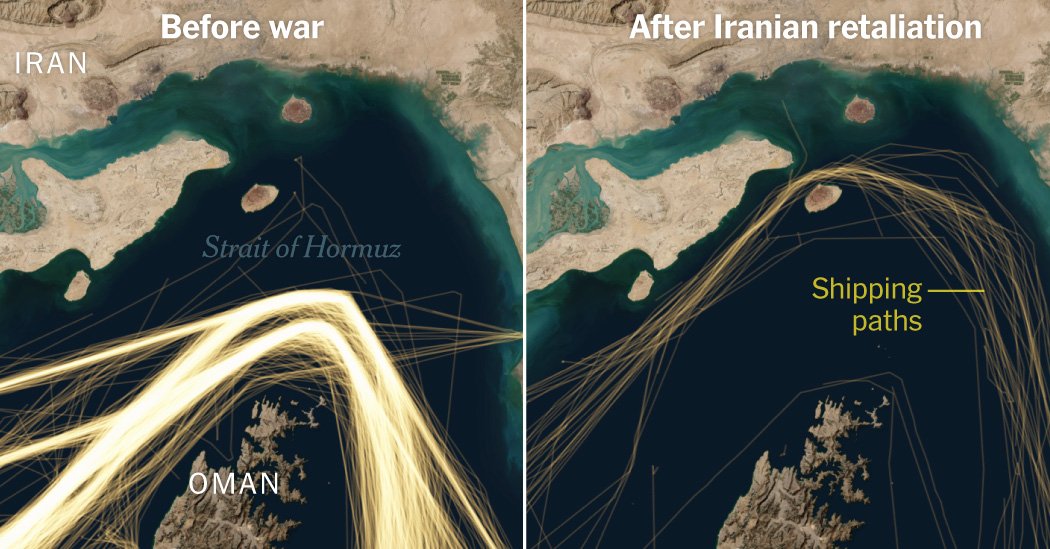
    Iranian threats hobbled shipping through the Strait of Hormuz during the war, moving what little remained north into its own waters.

    Before war Feb. 18–27

    After Iranian retaliation April 3–12

    Now the U.S. has mounted a blockade of its own, redrawing the board once again.

    After the U.S. blockade


    U.S. ships implementing blockade in Gulf of Oman

    U.S. ships implementing blockade in Gulf of Oman


    The American blockade aims to upend a dynamic that had become the new normal in the Strait of Hormuz since the United States and Israel launched the war in late February: Iran allowed ships carrying its own cargo to pass through the strait, even as it attacked commercial vessels and effectively halted shipping from almost everybody else.

    Though Iran was getting much-needed revenue from the Iranian-linked oil tankers it allowed to pass, the U.S. allowed them to keep transiting the strait. The goal was to temper the sharp increases in oil prices tied to the war.

    Most ships leaving the Persian Gulf came from Iranian ports

    Where ships exiting the strait after the war began last loaded cargo, oil or gas

    Note: Only ships that were loaded when exiting through strait are shown. Ships leaving other ports may also have Iranian ties, but their last port was not recorded as Iran. Ships entering the Persian Gulf are not shown. Source: Kpler. The New York Times

    On Monday, the United States imposed its own naval blockade, intent on ending Iran’s dominance of the waterway and cutting off its oil income by blocking all traffic to and from its ports.

    More than 12 American military vessels were stationed in international waters in the Gulf of Oman, beyond the strait, a U.S. official said on Tuesday. And the military is likely monitoring the region from a distance, using radar, patrol aircraft and drones, said Jennifer Parker, a former naval officer now at the University of Western Australia’s Defense and Security Institute.

    Since the U.S. blockade took effect, no ships linked to Iran have been spotted leaving the region, according to the vessel‑tracking company Kpler.

    Some ships appeared to have slowed or stopped. And at least two that had links to Iran, and are the target of U.S. sanctions, appeared to have turned around back toward the Persian Gulf as of Wednesday. One of the ships that reversed course, the Rich Starry, a Chinese tanker, was spotted traveling eastward through the strait on Tuesday toward open water before making a U-turn.

    ​​

    ​​Some ships without links to Iran did move through the strait on Monday and Tuesday, according to U.S. Central Command and companies like Kpler. The vessels stayed close to the Omani coast, keeping a distance from possible sea mines in the middle of the waterway.

    A precise accounting of how many vessels are crossing the strait is difficult, because vessels can hide or falsify information about their location, according to maritime intelligence experts.

    How Iran, then the U.S., changed shipping

    Vessel traffic in the strait slowed almost immediately after the United States and Israel attacked Iran on Feb. 28, from around 130 ships per day to just a handful.

    But even ships without ties to Iran may remain hesitant to attempt a passage. Amid fears that Iran may attack commercial vessels in response to the U.S. blockade, many shipping companies have been unwilling to risk the crossing. That might not change in the absence of a longer-term deal between the United States and Iran.

    Around 900 ships have been bottled up in the Persian Gulf over the course of the war, according to a New York Times analysis of Kpler data.

    How long ships have been stranded in the Persian Gulf

    Since start of war 10 to 42 days Less than 10 days

    OMANU.A.E.OMANQATARKUWAITIRAQIRANSAUDIARABIABAHRAINPersian GulfGulf of OmanStrait ofHormuz

    Note: Shows ship positions on April 12. Time spent in the Persian Gulf based on data from mid-February through April 12. The analysis includes oil tankers, cargo ships and gas carriers with a recent position in the Persian Gulf, excluding ships making routine deliveries between ports within the gulf. Source: Kpler (shipping data) The New York Times

    The standoff between the United States and Iran has spread concern that the vessels will be there even longer, giving the Iranians the upper hand, said Andreas Krieg, a senior lecturer in the School of Security Studies at King’s College London.

    “We’re getting to a place where everyone is very desperate, so the Iranians are trying to milk it as long as they can,” Mr. Krieg said. “I think we’ll have months and months of disruption around the Strait of Hormuz.”


    Source link

    Share. Facebook Twitter Pinterest LinkedIn Tumblr Email
    Previous ArticleThe Iran war will damage the petrodollar
    Next Article Turkiye’s Roketsan eyes top 10 exporter rank amid Middle East conflict | Business and Economy News
    Ironside News
    • Website

    Related Posts

    World News

    Map: 6.0-Magnitude Earthquake Strikes off the Coast of Chile

    June 1, 2026
    World News

    W.H.O. Chief Visits Ebola-Struck Region: ‘It’s Time to Move Fast’

    May 31, 2026
    World News

    Kenya Arrests 8 Students After Fire at School Dorm Kills 16

    May 29, 2026
    Add A Comment
    Leave A Reply Cancel Reply

    Top Posts

    Why Board Members Should Be Prosecuted

    September 23, 2025

    Chinese Companies Use Legal Threats to Halt Foreign Research

    February 12, 2025

    Israel presses on with Gaza City assault, at least 60 Palestinians killed

    September 20, 2025

    Brooklyn Beckham Reportedly Snubs Family During London Trip

    May 22, 2025

    German court rules asylum seekers unlawfully expelled at Polish border | Human Rights News

    June 2, 2025
    Categories
    • Entertainment News
    • Latest News
    • Opinions
    • Politics
    • Tech News
    • Trending News
    • World Economy
    • World News
    Most Popular

    US Supreme Court Green Lights Deportations

    June 25, 2025

    Britney Spears Fans Debate The Pop Star’s ‘Nastiest’ Song

    March 28, 2026

    Boris Johnson Urges The West To Pressure Putin

    February 26, 2026
    Our Picks

    Map: 6.0-Magnitude Earthquake Strikes off the Coast of Chile

    June 1, 2026

    Keke Palmer And Sean Evans Revive Romance Rumors

    May 31, 2026

    Two patients with Ebola-like symptoms in isolation in Brazil

    May 31, 2026
    Categories
    • Entertainment News
    • Latest News
    • Opinions
    • Politics
    • Tech News
    • Trending News
    • World Economy
    • World News
    • Privacy Policy
    • Disclaimer
    • Terms and Conditions
    • About us
    • Contact us
    Copyright Ironsidenews.comAll Rights Reserved.

    Type above and press Enter to search. Press Esc to cancel.